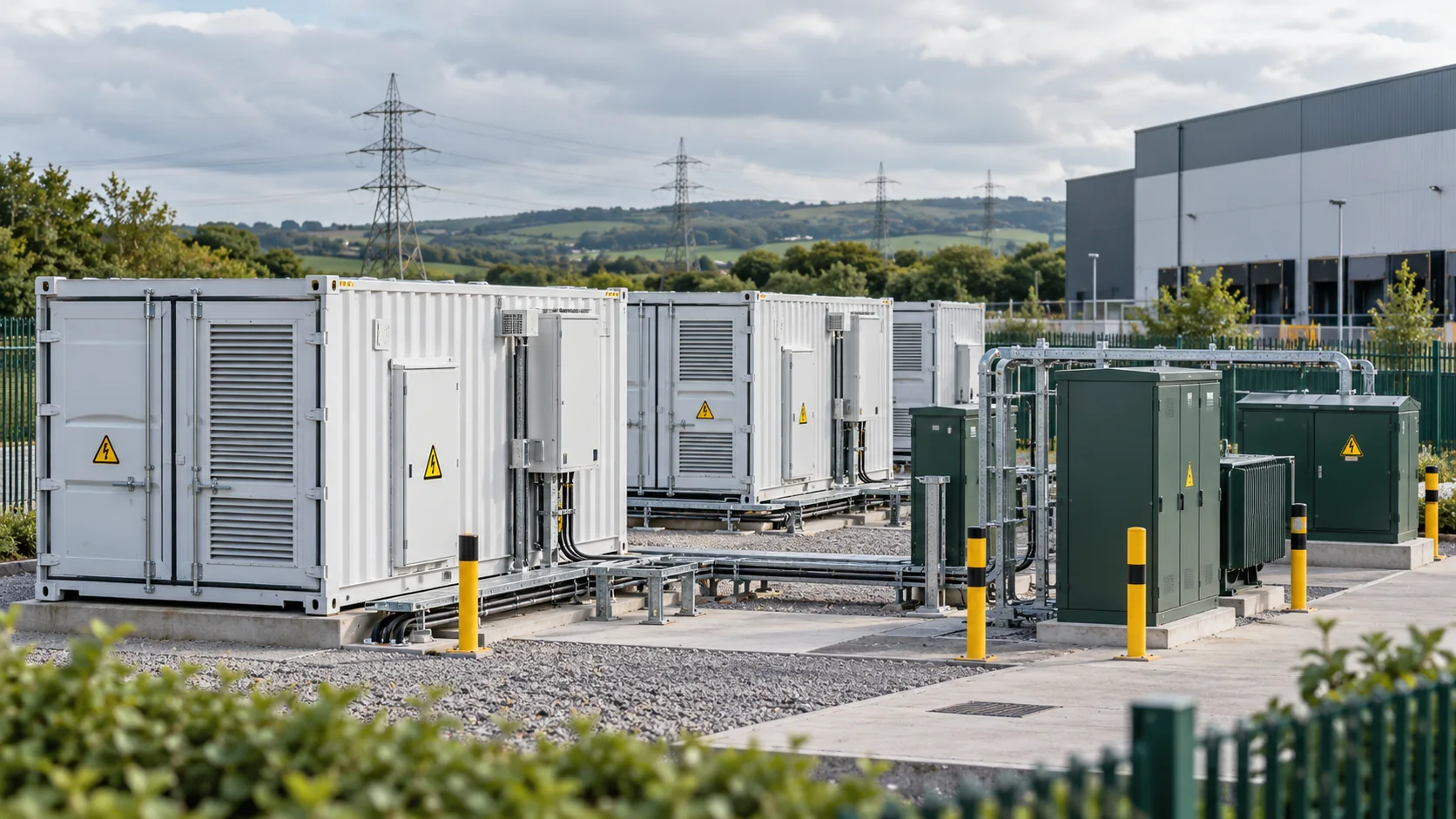
A commercial battery can reduce a site's electricity costs, but it may also earn money by responding to the needs of the wider network. That sounds like several income streams from one asset. In practice, each opportunity uses the same battery, and they have to be scheduled around your site's needs and the rules of each market.
First: what is happening on site?
Before looking at grid services, map your half-hourly electricity use, import and export capacity, operating hours, existing solar and any planned EV charging. A battery can shift purchased electricity into cheaper periods, reduce short peaks in demand and make better use of generation on site. Those savings may be more dependable than a forecast of market income. Your connection agreement and export limit define what the asset is allowed to do.
Our commercial battery overview explains the routes for existing systems and new projects. If you already have a battery, the existing battery assessment starts with what is installed rather than assuming a new system is needed.
Wholesale price opportunities
An optimiser may charge when power is less expensive and discharge or export when prices are higher. The gross price difference is only the beginning of the calculation: round-trip losses, network charges, supplier terms, trading fees and battery cycling can change the net result. A provider should explain who takes price risk and how settlement is checked. See our energy trading guide.
Frequency response and reserve
The system operator procures services that help keep supply and demand in balance. Frequency response requires qualifying assets to react to changes in grid frequency, often quickly and accurately. Other reserve services call for power when the system needs it. Technical qualification, metering, communications and availability commitments vary by service. An aggregator or optimiser can combine sites and manage market access, but access is subject to the programme's current rules. Read our frequency response explainer.
Capacity Market
The Capacity Market pays qualifying capacity to be available for periods of system stress, subject to auction outcomes and delivery obligations. Storage has specific duration and de-rating considerations. A forecast Capacity Market payment should never be treated as guaranteed revenue before the relevant contract and performance conditions are understood. Our Capacity Market guide goes deeper.
Local network flexibility
Distribution network operators can procure flexibility to manage constraints in particular locations. This makes postcode and connection details important: the opportunity may exist in one network area and not another. National services can change too; check live procurement and eligibility before building any revenue case. Explore grid flexibility.
How a revenue stack actually works
An optimiser may switch between site savings, trading and contracted services, leaving headroom for commitments and a reserve for your own operations. The same capacity cannot simply be counted twice at the same moment. Ask for a dispatch hierarchy, an explanation of conflicting commitments, and a net forecast with cautious and optimistic cases. Include degradation assumptions, maintenance, insurance, software fees and the terms for leaving the arrangement.
If you are assessing a new project, size and connection permissions should follow a realistic site and market study, not just the largest possible battery. You can start a new project assessment or review the commercial revenue guide. Battery Boost can help compare routes; actual eligibility and income need a site-specific check.
Further reading
NESO's balancing services, frequency response services and Demand Flexibility Service explain current system services. Government Capacity Market rules set the framework for that market.